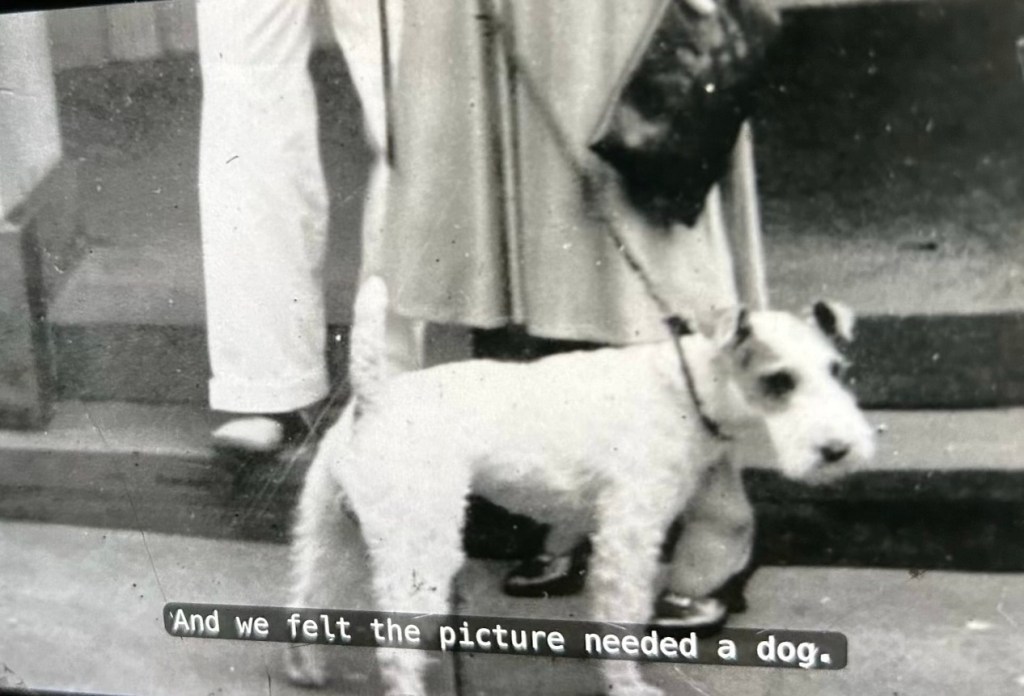
“When I was a boy, my family took great care with our snapshots. We really planned them. We made compositions. We dressed up. We posed in front of expensive cars, homes that weren’t ours. We borrowed dogs. Almost every family picture taken of us when I was young
had a different borrowed dog in it. … It seemed a necessary fiction that the Avedons owned dogs. Looking through our snapshots recently, I found eleven different dogs in one year of our family album. There we were in front of canopies and Packards with borrowed dogs, and always, forever, smiling. All of the photographs in our family album were built on some kind of lie about who we were, and revealed a truth about who we wanted to be.”
— richard avedon
—
I’m taking part in a race Friday.
I have no idea why.
Running is actually a generous term for my pace these days. It’s more of a stroll; something the casual passerby might refer to as “barely walking.” I will finish at the bottom of the field with the other stragglers and misfit toys. For this, I will pay hundreds of dollars for a T-shirt I will never wear and a little medal I will throw in a box with the other ghosts of failures past.
The course is on a one-mile sidewalk loop, no different than the one-mile sidewalk loop I run regularly at a park just as lovely as the race site. I will be surrounded by people I will never speak to, being shy, choosing to spend countless hours in solitude contemplating life and Neil Young and the AI apocalypse, just as I do every day on my neighborhood run. I will drink questionable coffee and eat hot dogs despite a failing belly. I will question my life choices for the millionth time.
Why?
Mr. Avedon told a story about his childhood in which his family would always borrow a dog when taking a group portrait. A necessary fiction, he called it.
Maybe that’s me.
I go to races so I can pretend I’m still a runner. I pin on my race number, line up at the start, and longingly watch the gazelles float off into the distance as I tromp around in my endless circles, pretending to be one of them. Afterward, I will avoid the race photos of the old man shuffling along, instead pulling up the snapshots in my mind where I’m gliding effortlessly along over endless miles. Then I will say I “ran” the so-and-so race and add another page to the fading scrapbook.
I could stage my own weekend race on my usual course a couple of miles from my home. Save money, see Mo, make my own shirt. But still, I’m drawn to these races by some unknown force that has stayed with me over the decades. The difference between a jogger and a runner is an entry blank, Dr. Sheehan said. What’s the difference between a runner and a pretender?
“All of the photographs in our family album were built on some kind of lie about who we were, and revealed a truth about who we wanted to be,” Mr. Avedon said. That’s me.
These races are built on a pretend version of who I am, and reveal a truth about who I want to be. A runner. Is that so much to ask?
And so I break out the luchadores and pancakes for another curtain call in the twilight of the third act. I will go in search of Kurt Vonnegut’s metaphorical envelope. I will dance, even though reformed Southern Baptists do no such thing.
A lifetime of running with borrowed dogs.
And always, forever, smiling.